Why I Started Following Real Plus Size Swimwear Models (And Why You Should Too)
There was a time when the arrival of summer felt like a slow, sinking dread. I would stand in the swimwear aisle at Target, touching the fabric of suits that seemed to be designed for someone else, someone whose body had never known steroids or thyroid medication. Every model in the catalog was smooth, tan, and impossibly flat-stomached. I would buy a suit, take it home, try it on in my dimly lit bedroom, and return it the next day. That cycle lasted three summers. Then I found something that broke it: I started following real plus size swimwear models — women who wore sizes 14 and up, who had stretch marks and belly rolls and thighs that touched — and I finally saw myself in a swimsuit for the first time.
After that first afternoon of scrolling through accounts like @curvygirlsquad and @swimsuitsforall, something shifted in my chest. These women were not apologizing for their bodies. They were lounging by pools, running into waves, buying suits in colors I had never dared to try. And they looked beautiful — not in spite of their size, but because their joy was so magnetic it redrew the whole picture. Let me tell you something: seeing a plus-size woman in a high-cut one-piece, grinning without crossing her arms over her stomach, rewired something in my brain that five years of therapy hadn't touched.
The Turning Point: Seeing a Body Like Mine in a Swimsuit
The turning point came when I bought a suit that I had seen on a plus size swimwear model named Marcy — size 18, post-baby belly, no filter. She wore a cherry-red halter from ASOS Curve with a low back and moderate cut. The reviews said it ran true to size, so I ordered it. When it arrived, I took it to the bathroom mirror, expecting the usual disappointment. Instead, I saw a woman who looked like she belonged in that suit. Not because the suit was magic, but because I had finally seen a body like mine wearing it first. That is the power of representation: it does not change your body — it changes your eyes.
I started paying attention to what these models were actually teaching us — and it is not just about body acceptance. It is about practical fit knowledge. When you scroll through the product photos on a brand like Eloquii or Swimsuits For All, the model is usually shown in multiple angles, walking, sitting, bending. You can see how the fabric behaves on a real torso. A plus size swimwear model might show you that a tankini does not ride up if you size up in the bottom, or that a one-piece with higher leg openings elongates the legs even on a short waist. That is information you cannot get from a mannequin or a flat lay.
How Different Bodies Are Finally Being Represented
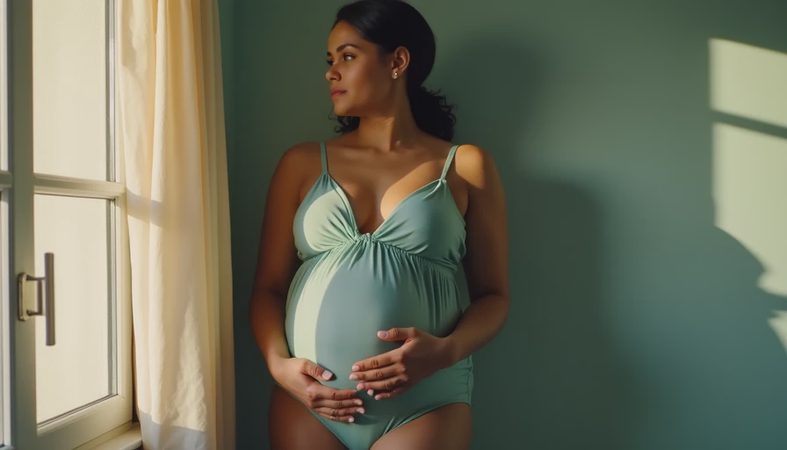
Many brands now hire a diverse range of plus size swimwear models, from hourglass to apple-shaped to pear. Some are 5'2", some are 5'10". Some have surgery scars, some have C-section shelves. When I was shopping for a black suit last month, I found myself on the Nordstrom site looking at a model who had a tummy that looked exactly like mine — that soft pooch that makes so many of us avoid bikinis. She was wearing a high-waisted bottom and a bralette top, and she looked so comfortable that I ordered the same set. It came yesterday. For the first time in my life, I did not return it.
Of course, representation alone does not solve everything. The plus-size swimwear industry still has gaps: many brands stop at size 24, and the models are often curvy but still conventionally proportioned (small waist, big hips). That can leave women with larger midsections or very short torsos feeling invisible again. But the landscape is shifting. More independent brands like Monki and Lavender and Lace are shooting real customers, not professional models. And some of the most honest advice comes from community hashtags like #plussizeswim or #curvybeach, where everyday women post their own photos. I have learned more from a 30-second video of a woman my size trying on three suits in her living room than from a hundred retouched ad images.
How to shop like you are one of them? Start by following three or four plus size swimwear models who have a similar shape to yours. Read their captions — many share sizing tips, links to dupes, and honest critiques. When you find a suit you like, check the reviews for women who mention their height and weight. Buy from brands that use diverse models; you can usually tell on the product page. And here is the part I had to learn the hard way: do not order the size you think you should be. Order the size that fits your strongest body part. If you are busty, buy to fit your chest. If you have wide hips, buy to fit your hips. You can always take something in, but you cannot add fabric to a suit that is too small.
The summer I turned 29, I wore a mustard-yellow one-piece to Alki Beach. The suit had a deep V-neck and cutouts at the waist — something I would have never considered before I saw a model my size wearing it. I walked from the parking lot to the water without a cover-up. My stretch marks caught the sun. My thighs kissed each other. And I did not look around to see who was watching. Because I had already seen myself in that suit, in my own mirror, wearing the exact same confidence as that plus size swimwear model in the photograph. You do not need to shrink to shine. Sometimes you just need to see someone else shining first.
No comments yet — be the first to share a thought.